United Airlines Flight UA770 Emergency Diversion
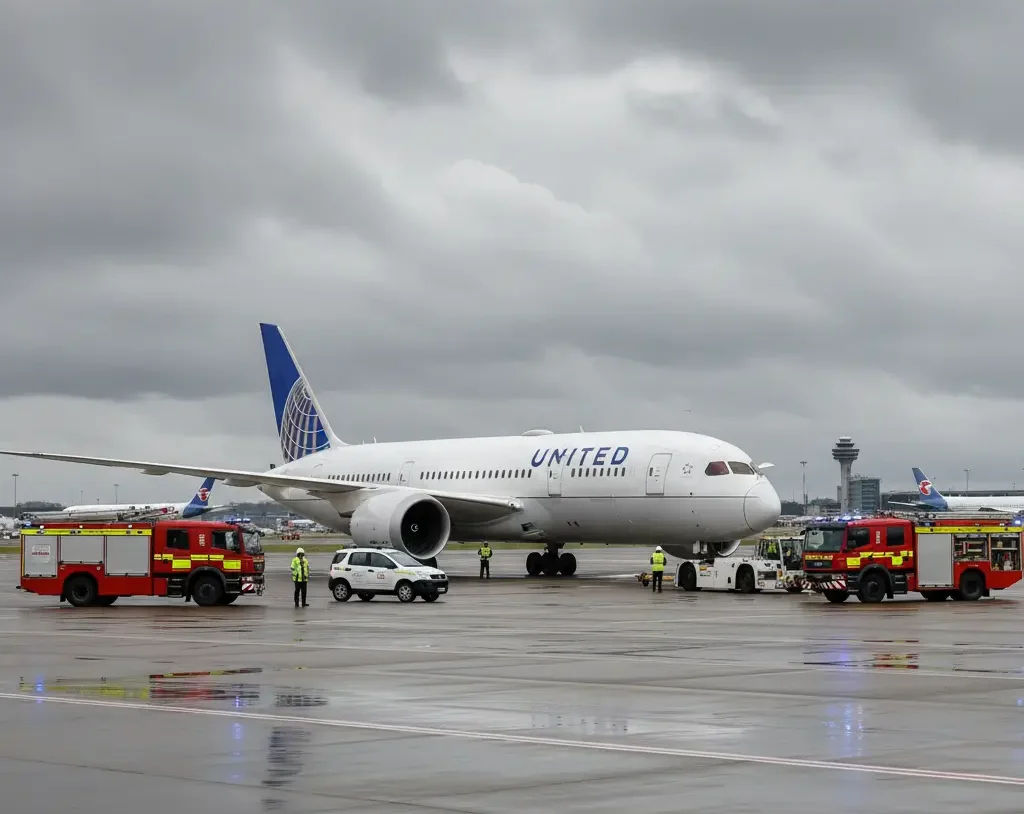
Air transport is considered one of the safest forms of transport, but any of the most advanced aircrafts may be subject to some unexpected events. This was the experience that the United Airlines Flight UA770 emergency diversion served as a reminder to the travelers that technical problems can be experienced very fast the response by trained teams of aviation workers is highly efficient. What could have been taken as an issue at 37,000 feet, quickly became a textbook case of safety, coordination, and professionalism which had all the passengers landing safely on the ground without any injuries.
Making Sense of the United Airlines Flight UA770 Emergency Diversion
On a transatlantic flight between Barcelona and Chicago, United Airlines Flight UA770, a Boeing 787-9 Dreamliner, was flying over the Atlantic Ocean and the crew reported a suspected cabin pressurization problem. The flight crew instantly complied with the emergency procedures and reported a general emergency with the international code 7700.
In a few minutes, the air traffic control and United operations center started collaborating to find the safest landing point at an unscheduled landing. The plane was diverted successfully to the Heathrow Airport in London, which is among the best-equipped airports in Europe to deal with emergency cases.
The Rationale Behind Emergency Diversions by Airlines
Emergency diversions such as the United Airlines Flight UA770 incident are potential incidents that may occur due to a number of reasons. The most common include:
- Technical Alerts — Aircrafts will identify and alert abnormalities that might require immediate action.
- Medical Emergencies — In cases where the passenger or the crew member needs urgent attention, the best solution would be to land promptly.
- Weather Conditions — Changing patterns may happen too rapidly to proceed towards the initial destination.
- Security Situations — Security situations are uncommon but they involve urgent rerouting due to security reasons.
Every distraction is considered thoroughly safety never takes a second place to time or comfort.
Interior Cockpit: Crew Response
Airline crews have a set of strict checklists when they determine that something is wrong. For Flight UA770, this included:
- Evaluating cockpit warning and validation of system data.
- Liaising with the air traffic controllers to identify the closest suitable airport.
- Notifying passengers in a calm manner and order.
- Ready to make a controlled landing and descent.
The calmness and following procedure by the crew avoided panic and made sure that each action was approached with precision.
On-Ground Support and Reactions of Passengers
Those who were on the plane of UA770 shared their experiences claiming that they felt nervous but said that the crew members were able to communicate and reassure the passengers. Although the landing was not planned, most people termed the incident as calm and controlled.
Emergency response teams were placed on standby at Heathrow when they arrived in case of any emergency. United Airlines organized rebooking service, accommodation, and meal vouchers to impacted passengers a great gesture of taking good care of customers even when one had not anticipated such an occurrence.
Behind the Scenes: Aviation Coordination at Work
The process of emergency diversion goes way beyond the cabin.
- Safe routing and clearance of airspace are handled by air traffic controllers.
- Upon arrival, maintenance engineers are ready to check the plane.
- The passenger logistics are organized by ground teams.
- United has its operations center that locates real-time flight information and communication.
Such a multi-layered coordination demonstrates that the international aviation networks avoid operational disruption and focus on human life.
Lessons Learned During the United Airlines Flight UA770 Emergency Diversion
The UA770 emergency diversion of the United Airlines flight underlines a number of important lessons to be discussed by travelers and the aviation community:
- Training is important — The flight crews train to address anomalies during the in-flight.
- Harmonious communication — Trust in passengers is established.
- Technology saves time — The modern aircraft systems track problems at an early stage.
- Safety first — It is always better to have a delayed flight than an unsafe one.
These values remind us why commercial aviation is considered to be the safest means of transportation in the world.
Final Thoughts
The United Airlines Flight UA770 emergency diversion can be viewed as a positive example of how aviation safety measures operate exactly as intended. One of the possible technical problems was addressed with the help of quick thinking, collaboration, and impeccable performance, which led to the absence of injuries and the minimum number of disruptions.
To travelers, this incident serves as a reminder of the confidence we can have in modern air transport and the professionals ensuring every safe landing. In the event of an issue thousands of feet above the ground, preparation remains the best answer and the aviation industry continues its unstoppable dedication to bringing everyone home safely.