Inurl:Continuity Explained: What This Google Search Means (and the Two ‘Continuities’ You’re Looking For)

Search for “inurl:continuity” and Google hands you a strange mix: calculus lecture notes, physics exam questions, and university math pages — but nothing that explains the search itself. Here’s the short answer: “inurl:” is a Google search operator that shows only pages with the following word in their URL — so “inurl:continuity” lists pages whose web addresses contain “continuity.” That’s exactly why the results are a mixed bag, and why two completely different subjects — calculus and physics — are fighting on the same page.
What Does “inurl:continuity” Actually Mean?
Two parts, same as any operator query:
- “inurl:” — a documented Google search operator meaning “only show pages with this word in the URL.”
- “continuity” — the word being filtered on.
So inurl:continuity = “Find me pages with ‘continuity’ in the web address.” The colon is essential, and there must be no space after it (inurl:continuity ✅, inurl: continuity ❌).
Because the filter is technical — URL text, not meaning — it catches anything with “continuity” in the address. Math departments and exam-prep sites both qualify, which is why your results page looks like a university noticeboard exploded.
The Two “Continuities” in Your Results — Which One Do You Mean?
This is the real source of the confusion. The search results silently mix two unrelated ideas that happen to share a name:
| Continuity in calculus | The continuity equation in physics | |
|---|---|---|
| Field | Mathematics | Physics / engineering |
| What it describes | Whether a function’s graph is unbroken | How fluids (or electric charge) flow without piling up or vanishing |
| Core idea | Can you draw the graph without lifting your pencil? | What flows in must flow out — mass/charge is conserved |
| Key formula | lim f(x) = f(a) as x → a | A₁V₁ = A₂V₂ |
| Who searches it | Students (AP calculus, college math) | Engineering/physics students |
No page in the current results acknowledges this collision. Now that you can see it, pick your lane below.
Continuity in Calculus, Simply
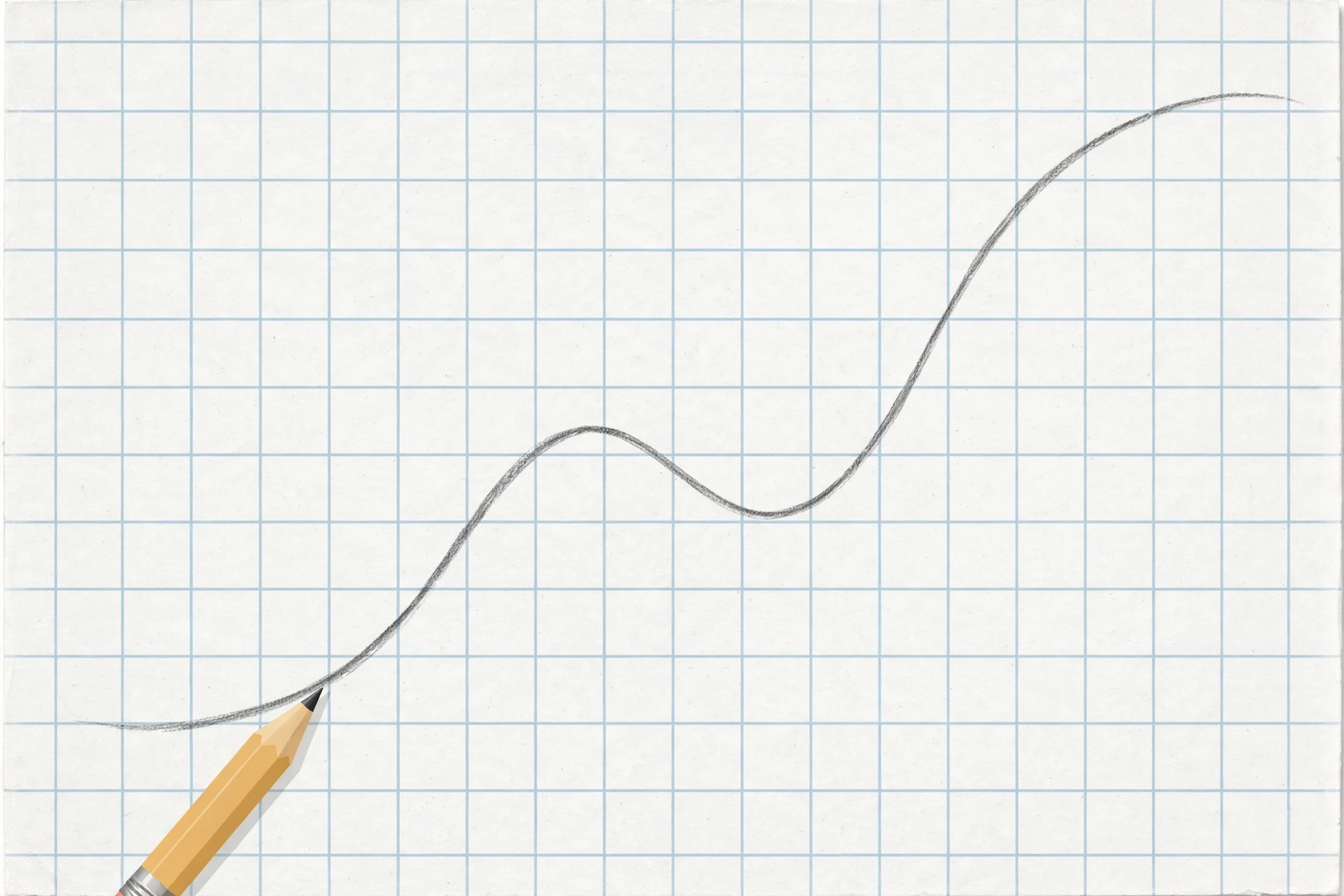
Forget epsilon-delta for a moment. The everyday test: a function is continuous if you can trace its entire graph without lifting your pencil. A break, a jump, or a vertical shoot-off means it’s discontinuous there.
Formally, mathematicians check three conditions at a point (a detailed treatment is on LibreTexts):
- f(a) exists — the function is defined at that point.
- The limit exists — the graph approaches the same value from both sides.
- Limit equals value — what you approach is what you get.
Discontinuities come in three flavors: a hole (removable — e.g., (x²−4)/(x−2) at x = 2, which is undefined at exactly 2 but fine everywhere else), a jump (left and right limits disagree, like a staircase), and an asymptote (the graph shoots to infinity, like 1/x at x = 0).
The Continuity Equation in Physics, Simply

Now the other one. Imagine holding your thumb over a garden hose: the water speeds up as the opening narrows. That’s the continuity equation in action.
The principle: for a steady flow, what goes in must come out. If a pipe narrows, the fluid has to move faster through the narrow part to keep the same amount passing per second. The math is compact:
A₁V₁ = A₂V₂ — (area × velocity) at point 1 equals (area × velocity) at point 2.
It comes from the conservation of mass: fluid can’t be created or destroyed inside the pipe. Electronics has its own version too — the continuity equations for holes and electrons, built on conservation of charge: the rate of change of charge carriers equals drift + diffusion + generation − recombination.
Two examples that make it click: a river flows faster where it narrows, and traffic on a highway speeds up (or jams) where lanes merge.
Other “Continuities” You Might Have Meant
The word pops up in a few more places the search results never mention:
- Electrical continuity — the multimeter “beep test” electricians use to check whether a circuit path is unbroken.
- Film/TV continuity — keeping details consistent between shots (the coffee cup that mysteriously refills).
- Business continuity — a company’s plan for operating through disruptions.
If none of the math or physics above matches what you wanted, one of these probably does.
Using inurl: Like a Pro

If you’re a student hunting study material — likely why you ran this search — the operator is a shortcut worth learning:
inurl:continuity filetype:pdf— lecture notes and PDFs with “continuity” in the URL.inurl:continuity site:testbook.com— only exam-question pages on that site.inurl:continuity intitle:notes— “continuity” in the URL, “notes” in the title.allinurl:continuity calculus— both words must appear in the URL.
General syntax rules: no space after the colon, combine freely with site:, intitle:, and filetype:, and use a minus (-exam) to filter out what you don’t want.
Frequently Asked Questions
What is continuity in simple words?
In math: an unbroken graph. In physics: steady flow where nothing piles up or disappears.
What is the continuity equation?
The physics formula A₁V₁ = A₂V₂ — in a steady flow, (area × speed) stays constant along a pipe because mass is conserved.
What does “inurl” mean in Google?
It’s a search operator that restricts results to pages containing the given word in their URL. See the complete list of Google search operators for all 40+ of them.
Why are my results a mix of math and physics?
Because inurl: filters by URL text, not by meaning. Both calculus pages and physics pages have “continuity” in their addresses, so both match.
Is inurl:continuity a hack or code?
No — it’s a public, documented Google feature. Anyone can use it.
The Bottom Line
“inurl:continuity” is Google’s URL filter doing its job a little too literally — which is why calculus notes and physics equations share your results page. Now you know what the operator does, which “continuity” is which, and how to aim the search at exactly the material you want.
Confused by other strange search strings? Read our guide on how to stay safe when looking up unfamiliar terms online — it covers the checks worth making before trusting results you don’t understand.